Goodness?
envy and Goodness.
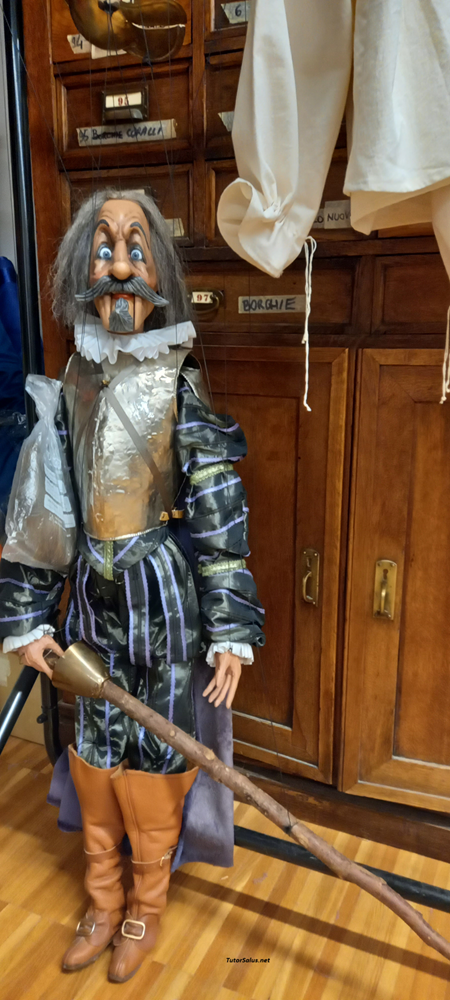
Don Quixote’s[1] illusions generally attribute a melancholy Goodness to the character: can envy be goodness?/ The puppet’s photo is taken from the Theater workshop of the ‘Compagnia Carlo Colla & Figli’, in Milan.
To benefit from one’s calling[2] / 75.
Envy arrogates an only presumed Goodness, which instead follows from a systematic Rush.
Even assuming a simultaneity, there is a difference in positions: that is, non-predictability, even some transcendence.
Marina Bilotta Membretti/ Cernusco sul Naviglio – March 30, 2026
TutorSalus.net - Freudian journalism
[1] ‘El ingenioso hidalgo Don Quixote de la Mancha’ is the successful novel by Miguel de Cervantes, published in 1605 with unexpected public success, making it - besides being perhaps the first modern novel - also the best-selling novel in history. It seems the protagonist was inspired by a Spanish nobleman for whom the author himself fought and was wounded in 1571, during the Battle of Lepanto.
[2] www.tutorsalus.net/index.php/en/pensare-da-partner-2/358-psychoanalyst-and-profession-1