

Excellent notes of economic thinking taken from analytical work.
Strawberries
ça parle.
Five open issues raised by Jacques Lacan.
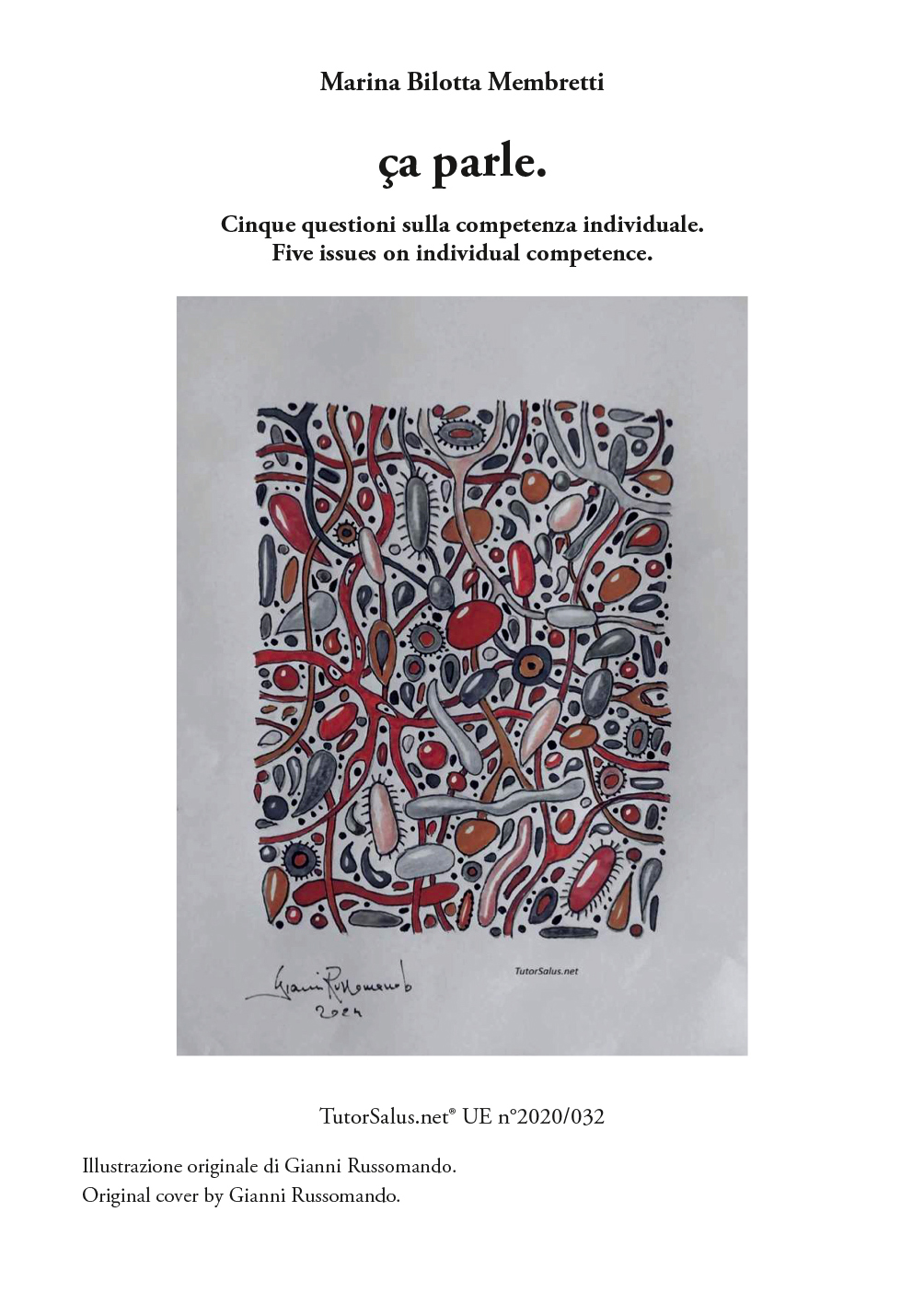
Five open issues - which very probably Freud would have appreciated from his patient and student - raised by Jacques Lacan and which have gradually come to light through his ‘Séminaires’.
‘Jacques Lacan. Scritti’ (Vol. I and II - Giulio Einaudi editore SpA, 1974 and 2002) was edited by Giacomo B. Contri, analyzand and student of Jacques Lacan and later a psychoanalyst himself: it offers the unique authorized translation into Italian of the ‘Séminaires’ from 1955 to 1966.
Assuming Freud's discovery of urge and removal, Giacomo B. Contri have posited the human being as a juridical motion-towards-a-goal (‘Il pensiero di natura. Dalla psicoanalisi al pensiero giuridico’, Giacomo B. Contri - SIC Edizioni 1994 and 1998) where individual competence - the lemma ‘work’ that is – creates an unbreakable link between the economic and the juridical : Freud barely got to sketch out the economic indicating it as fundamental to psychoanalysis.
Indeed the law of motion is the individual thinking, of which the unconscious is a ‘not minor’ form, an instance that conscience bars but has to account for: it is mature from birth, and available from that moment onward.
This essay re-proposes the five issues Lacan posed on individual competence which founds psychoanalysis.
It is the first publication by TutorSalus.net registered trademark with EU n°2020/032.
Marina Bilotta Membretti/ Cernusco sul Naviglio - April 23, 2026
TutorSalus.net - Freudian journalism
It’s simple/ 9.
Between obsessive neurosis and psychosis.

"I am comparing 'reward' with 'satisfaction': Freud called 'urge'—which means nothing other than 'thinking'—the legal agency that promotes each of us and advises what to do... I equate the 'non-nocence' (non-harmfulness that is) of an act with a work that does not recognize 'reward' but recognizes 'satisfaction', and this means to revisit one’s thinking when proving to have been 'satisfied' and can thus begin to 'desire' again, that’s what 'urge' is." (Cited from the ‘Prolusione’ by Giacomo B. Contri - October 26, 2019 at the Symposium ‘Potere e innocenza’ 2019 - 2020 organized by ‘Società Amici del Pensiero Sigmund Freud’, Milan.)
Let us approach 'reward', apparently harmless, but on which psychosis greedily feeds: ‘jouissance’ without direction that deceives and deviates toward laziness—always secondary—of psychosis.
Between obsessive neurosis, which something allows for 'work', and psychosis, which simulates ‘work’, there is a short and rapid, never automatic step.
Right at this crossroads one’s analytical work finds some shelter, albeit fragile and even threatened.
Marina Bilotta Membretti/ Cernusco sul Naviglio – April 8, 2026
TutorSalus.net - Freudian journalism
Law to occur.
‘La grazia’ [1], by Paolo Sorrentino[2].

In the photo: screenshot shared from the trailer of ‘La grazia’, by Paolo Sorrentino.
It is in the awakening from a nightly dream that we realize we have the right to gather that dream because it all holds together: and it would be a good start every time.
Paolo Sorrentino, listening to him, yields to melencholy: a fairly ordinary, yet ineffective, defense for those who shun common arrogance, and perhaps have had to pay the price for it. Any dream, however strong and even three-dimensional it may be, is never arrogant and fades easily - we know it - but the message remains etched in our mind, like the blueprint of a sculpture.
Mariano De Santis “never dreams, but he would very much like to...”: he lacks the courage to admit that he can't wait to become Senator for life, a succession automatically[3] foreseen for those who have been President of the Italian Republic: he is the institution and defender of the Constitution, that is, with powers placed at the summit of those (legislative, executive and defense, judicial)[4] of governing: It is a responsibility that others would face with the gay lightheartedness of obtuseness, but which requires from the protagonist a daily "diligence of a good father"[5] that bends and sets one to work. Not at all, mainly, a matter of gender.
“To whom do our days belong?” his daughter often asks him: but the man sculpted by Paolo Sorrentino does not like rhetoric, unlike the nightly dream. Instead, where to start? Good question.
And the man brace himself - he knows how irreplaceable - in the law: or rather, a grace.
Marina Bilotta Membretti/ Cernusco sul Naviglio - March 12, 2026
TutorSalus.net - Freudian journalism
[1] Presented as opening film at the ‘Mostra internazionale d’arte cinematografica di Venezia’ 2025, ‘La grazia’ has been directed and co-produced by Paolo Sorrentino.
[2] Paolo Sorrentino (1970) is an Italian director, screenwriter, novelist and film producer: ‘Le conseguenze dell’amore’ (2004); ‘Il divo’ (2008) which received the Jury prize at the Cannes Film Festival; ‘La grande bellezza’ (2013), which obtained the Academy Award and the Golden Globe as the best foreign film, and four European Film Awards: ‘Loro’ (2018); ‘E’ stata la mano di Dio’ (2021); ‘La grazia’ (2025) are among his most significant works. In 2010 he published his first novel ‘Hanno tutti ragione’, and in 2015 he received an honorary degree in ‘Filologia Moderna’ from the ‘Università Federico II’ of Naples.
[3] Art. 59 paragr. 1, from the Constitution of the Italian Republic.
[4] Art. 87 mainly, from the Constitution of the Italian Republic.
[5] Art. 1176 of the Civil code.
Acknowledgements.
Astrid Lindgren and his firstborn Lars.
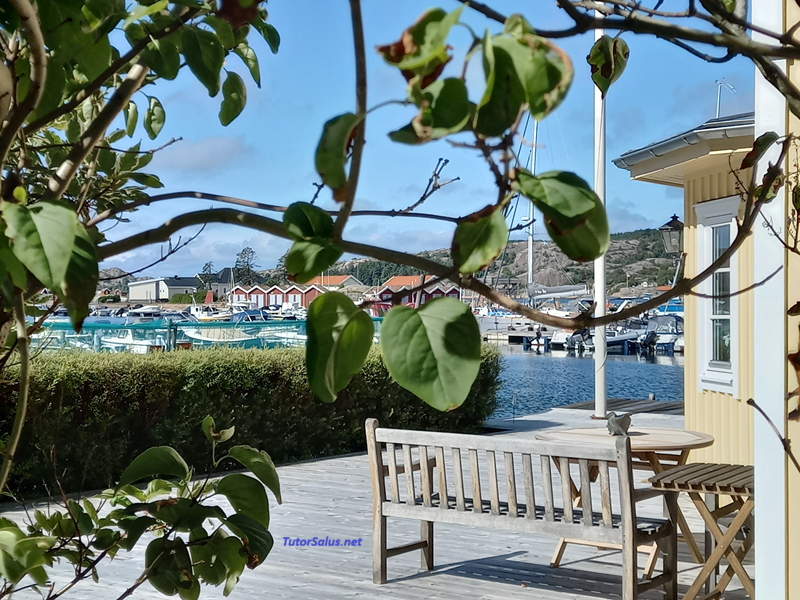
In the photo: a corner of Fjällbacka in southern Sweden, an outpost of the beautiful ‘Weather Islands’ archipelago (Väderöarna). It is dominated by the mountain Vetteberget that has been split into two peaks since the Ice Age, one of which is nicknamed 'The Wolf's Throat' (Vargklämman) in honour of the story ‘Ronja, the Robber’s Daughter’ by author Astrid Lindgren.
Books to work on/ 9.
Astrid Lindgren[1] also wrote a brief, isolated short story concerning perhaps the darkest period of her life. 'Mio, min Mio’[2] is the narration of a presumed lack—the Theory of a lack, that is – but merged in the pain of a guilt which is never really a guilt, and yet fears the truth.
Stepping into the story—held tight by an atrocious, unspeakable affection – Astrid makes the child-character say what her own anguished imagination suggested to her as a young single mother in the early 1900s, in a tiny village of a matriarchal Sweden.
Astrid had experienced a 'lighthearted' childhood – as she named it in her maturity – deliberately far from the reality of the ongoing war, as her parents had wished. She was rudely awakened from this deception and, when she found herself pregnant with a child whom the wealthy father would not have recognized, decided to move to Copenhagen. In that decent city, she was able to face the birth that her fellow villagers had made so difficult for her.
In Copenhagen in fact the young mother made a good friend—a colleague at her new library job, of the same age and married: Elsa had also a child just slightly older than little Lars, and the family welcomed Astrid’s baby warmly while she sought peace and stability. It may be difficult to admit, but 'little' Lars was very happy during those first years of life in his new family, with a near-twin brother, two moms, and an affectionate dad.
It was conscience, then, to intervene: because Astrid hadn’t stopped dreaming of 'le-nom-du-père'[3] for 'her' Lars—also according her Motherland’s Law, so civilized and inflexible. When Astrid finally met the man she would sincerely marry, he was also willing to welcome a son already born: Lars instead suffered immensely from that forced, unfair, arbitrary moving from which he never truly recovered, even as an adult.
Why not conveniently grow that asymmetrical family which was going strong, but which the same adults - so intelligent in the time before – now tried to clumsily diminish?
As a matter of fact Lars's voice did not reach the adults with equal strength, nor, perhaps, did he look for it further himself.
Instead he, reaching out from that 'lack' that leaves no escape, even took it upon himself to protect his mother's publishing rights. [4]
Marina Bilotta Membretti/ Cernusco sul Naviglio – February 13, 2026
TutorSalus.net - Freudian journalism
[1] Astrid Lindgren (1907 - 2002) was born in Vimmerby, southern Sweden, and spent her childhood on the family farm in a peaceful and 'lighthearted' - as she herself named it in her maturity - environment . She began working very young as a proof-reader, and then in the local newspaper: at eighteen she realized she was expecting a child, but the father, who was also her employer, refused to acknowledge him. So Astrid moved to Copenhagen where her firstborn Lars was born in 1926: she could entrust the baby to the family of her friend Elsa, who was married and already a mother of a child, while Astrid was working in the city. When the financial difficulties of the move were overcome, in 1931 Astrid married Sture Lindgren, who gave his surname to Lars. Karin was born in 1934, and while Astrid was taking care of her she also invented the adventures of the girl 'Pippi Longstocking' (Pippi Långstrump), which began to be published starting from 1945, and also successfully translated into many languages, even adapted into television series: while Astrid continued to work in children's publishing, also venturing into 'crime' novels. She received many honours and awards: the ‘Hans Christian Andersen Award’ (1958), the ‘Lewis Carrol Shef Award’ (1973), the ‘International Book Award’ from UNESCO (1993), the ‘Right Livelihood Award’ (it is made similar to the Nobel Award for children’s literature, 1997). In 1997 she was also named Swedish person of the year.
[2] Written in 1954 when her son Lars was already an adult and Astrid Lindgren was perhaps in the most productive years of her career, 'Mio, min Mio' remains a unique and singular story among the author's works, not only for the direct biographical theme involving both Astrid and Lars, but also for a melancholic style that was not entirely congenial to her/ Adriano Salani Editore s.u.r.l. (2025), translation into Italian by Alessandro Storti, illustrations by Johan Egerkrans.
[3] Preceded by ‘The Mirror Stage as Formative of the Function of the ‘I’’ (‘Communication given at the XVI International Congress of Psychoanalysis’ – Zurich, July 17, 1949) and then by the Lesson ‘The Purloined Letter’ on April 26, 1955 ('Jacques Lacan. Scritti', Vol I, a cura di Giacomo B. Contri - Giulio Einaudi SpA 1974 e 2002) inside the Seminar Book II by J. Lacan 1954 1955, the expression ‘Le Nom-Du-Père' (The Name of the Father) was introduced by J. Lacan on January 15, 1958 in the Seminar Book V ‘The Formations of the Unconscious’ (translat. into Italian by Antonio Di Ciaccia and Maria Bolgiani, Giulio Einaudi editore SpA - 2004).
[4] Lars Lindgren (1926-1986) had studied to be an engineer, but from 1968 to 1986 he managed the company 'Tre Lindgren AB', which handled Astrid Lindgren’ publishing rights.